




If you'd like to receive
updates about the
Winter Solabration, please

Storysmith® Susan Marie Frontczak brings literature
to life, 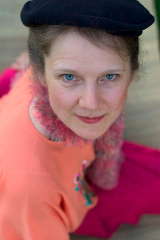 creates
stories from thin air, and hones personal experience into tales worth telling
again and again. Her stories and living history presentations have taken her to schools, libraries, corporations, and theaters across 43 of the United States as well as Europe.
Susan's original stories have been heard on Colorado Public Radio (Morning Edition), at the Colorado Music Festival Young People's Concert, through Story Gleaner productions, and on her CD "The
Three Fishes & Other Stories." Susan Marie’s motto is: "Give
me a place to stand, and I will take you somewhere else." More at www.storysmith.org.
creates
stories from thin air, and hones personal experience into tales worth telling
again and again. Her stories and living history presentations have taken her to schools, libraries, corporations, and theaters across 43 of the United States as well as Europe.
Susan's original stories have been heard on Colorado Public Radio (Morning Edition), at the Colorado Music Festival Young People's Concert, through Story Gleaner productions, and on her CD "The
Three Fishes & Other Stories." Susan Marie’s motto is: "Give
me a place to stand, and I will take you somewhere else." More at www.storysmith.org.
The Maroon Bells Morris Dancers
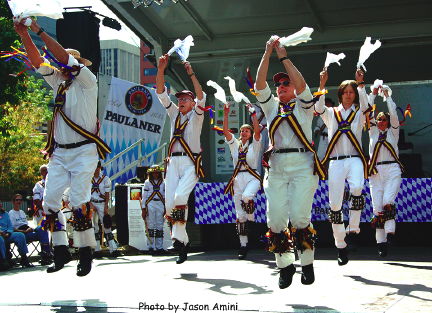 Maroon Bells is the oldest of the morris teams now dancing in Colorado. We’ve been kicking up our heels, and jingling a few bells, since 1982 – long enough for some of our offspring to grow up and join the team. Our dancers come from towns along the Front Range and many walks of life. All are welcome to join us, particularly for our new dancers class each fall. We perform locally, at festivals and for special events, as well as a few more distant spots, e.g., Red Lodge, MT, the U.S. Midwest, and, every decade or so, in England. If you’d like to join us, please contact Squire Rowan Sauer for more information, or visit us on the web at: maroonbellsmorris.org
Bryan Connolly Extreme Juggling
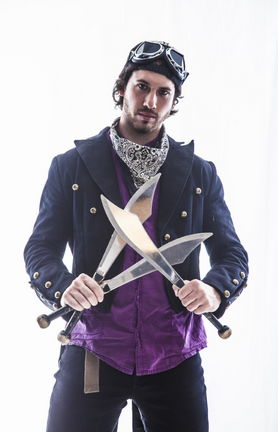
Mixing whimsy with bloodlust, beauty with brutality, grace with destruction, Bryan the Circus Knight is a living dichotomy of worlds bound by the common desire to perform. His quest: to shatter preconceptions of circus. As a youth, Bryan’s first experience performing was juggling on the streets of Boulder, Colorado and has since honed his street show and earned a Bachelor’s degree in Performance from Colorado State University. While in school, Bryan joined "Motion Picture Stunts and Tactical" where he became versed in high falls, acrobatics and stage combat. After graduation, Bryan performed in several circus shows, including the role of Drosselmeyer in MOTH Circus’s production of "The Nutcracker," as well as five productions with the Phantom Circus show. When he’s not training or performing circus, he also does fight choreography, stunts, and jousting with the Knights of the Tempest, and won second place in the Light Armor Joust two years running at the Longs Peak Scottish-Irish Highland Festival, the largest international jousting competition in the United States. His fondest wish is to gradually merge his two worlds into one whole full-spectrum performance experience of both circus and combat.
More at Bryan-Circus-Knight on Facebook.
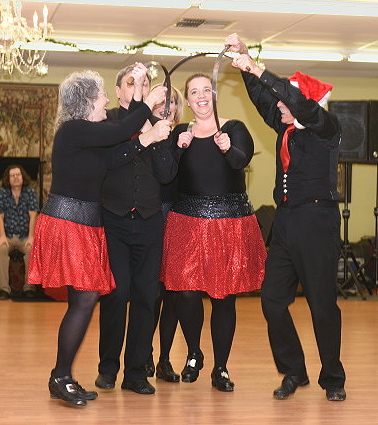 The Solstice Sword Dancers are five members of the Bennett School of Irish
Dance: Beckee Laurie, Bill MacAlister, Katie Harty, Krystal Thompson, and Molly Bennett. As exciting as Irish
dancing can be, the intricate interlacings
of rapper swords adds a whole new dimension to their dancing experience.
Their practices have become one of the premier spectator events at the
Friendship Irish Dance Center, since nobody can believe that anyone
could extricate themselves from the complex tangles of steel that are
The Solstice Sword Dancers are five members of the Bennett School of Irish
Dance: Beckee Laurie, Bill MacAlister, Katie Harty, Krystal Thompson, and Molly Bennett. As exciting as Irish
dancing can be, the intricate interlacings
of rapper swords adds a whole new dimension to their dancing experience.
Their practices have become one of the premier spectator events at the
Friendship Irish Dance Center, since nobody can believe that anyone
could extricate themselves from the complex tangles of steel that are
 the heart of rapper sword figures. They always do, however, like so
many armed Houdinis, ready to go into the next impossible tangle and
amaze everyone by emerging unscathed.
See them on YouTube.
the heart of rapper sword figures. They always do, however, like so
many armed Houdinis, ready to go into the next impossible tangle and
amaze everyone by emerging unscathed.
See them on YouTube.
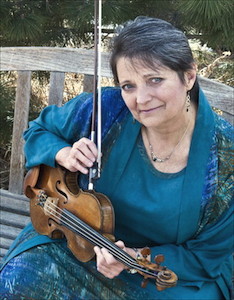
With Deb Carstensen on fiddle. Specializing in Celtic music, Deb is known throughout the Colorado Front Range for her passionate, fiery fiddling. She played classical violin up until college and, after taking a long break from the instrument, took it up as a "fiddle" and has been playing and performing folk music ever since. She has studied Irish and Scottish intensively and is expert in playing both for dancing and performance.

Performers for this year’s Grand March are members of the Northern Colorado Caledonia Pipe Band. The NCCPB is a successful competition band with members from Commerce City to Greeley to Ft. Collins to Boulder and everwhere in between.
Visit the band’s website for more information. Also on

Susan Marie Frontczak, Storyteller / Maroon Bells Morris Dancers / Bryan Connolly Extreme Juggling / The Solstice Sword Dancers / Pipers & Drummers / Chris Kermiet, Dance Caller & M.C. / Tina Fields, Guest Caller / Tina Gugeler / Julia Hays / Keith Barnhart / Ed Secor / Top of Page
Chris
Kermiet has been calling and teaching traditional American
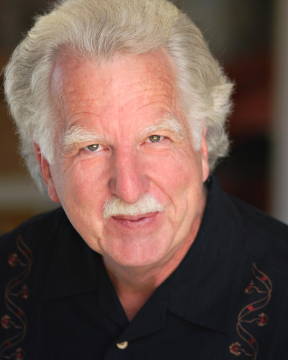 community
dances for over forty years and is recognized as one of the finest callers
in the United States. In 2000, he received the Heritage Award/2000 Artist
Fellowship from the Colorado Council on the Arts for calling and teaching
traditional American dance, as well as the Westword Best of Denver Award
for Best Dance Caller. In 2009 he was honored as a "Living Legend of Dance"
by the Carson-Brierly-Giffin Dance Library at the University of Denver. His video interview can be
viewed here. During the last ten years, as well as being in
demand as a caller and teacher of traditional dance, he has created choreographies
for a number of performing groups and theater companies.
community
dances for over forty years and is recognized as one of the finest callers
in the United States. In 2000, he received the Heritage Award/2000 Artist
Fellowship from the Colorado Council on the Arts for calling and teaching
traditional American dance, as well as the Westword Best of Denver Award
for Best Dance Caller. In 2009 he was honored as a "Living Legend of Dance"
by the Carson-Brierly-Giffin Dance Library at the University of Denver. His video interview can be
viewed here. During the last ten years, as well as being in
demand as a caller and teacher of traditional dance, he has created choreographies
for a number of performing groups and theater companies.
Chris grew up with traditional dance. His father, Paul Kermiet, was one of Colorado's premier old
time callers, and ran a summer dance camp on Lookout Mountain where Chris heard the
best callers from around the country. He learned from all of them, and
it shows in his teaching and calling, his broad repertoire and familiarity
with traditional dance, and the way he puts new dancers at ease.
He calls at numerous events across the Front Range.
Visit his web-site.
He has also been posting his poems on-line at poemofthemonth.us for the past seven years.
The January, 2021, poem-of-the-month is:
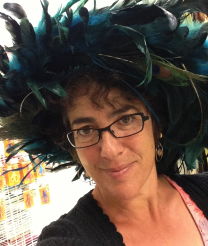
Tina Fields calls contra and other traditional American "barn" dances, with the goal of creating maximum joy. She is known for her effervescent sparkle, great sense of timing, clear projection, singing style, patience with new dancers, collaborative way of working with bands, and comfortable humor. Tina brings day job skills as a college professor to her dance teaching. She is also a singer, myth-loving storyteller, and ceremonial facilitator. She has been on staff for various dance camps as both contra caller and songleader. More at Tina’s website.
Tina recently published an article chronicling some of her family elders’ involvement with square dancing in the 1950’s rural west. Read it here: http://www.cdss.org/programs/cdss-news-publications/cds-online/square-dance
This year’s band:
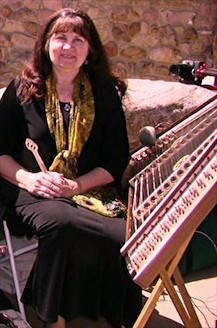
Tina Gugeler is the 2015 Hammered Dulcimer National Champion (her second time to win the championship in the Hammered Dulcimer competitions!)
Tina Gugeler has been performing and teaching the hammered dulcimer for over 25 years. Her musical roots started with Celtic and American fiddle tunes. Her music now includes mixing pop tunes with traditional tunes for a delightful and unexpected flavor. She performs solo and with guest musicians.
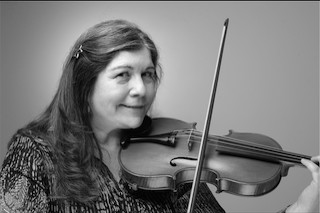
Julia Hays is from a family of musicians in the Boston area. She first came to Colorado to play in a festival, liked the place, and decided to stay. Her professional playing has included everything from symphony and opera orchestras to western trios, a few Celtic bands, her own jazz combos, and recording. Between one thing and another, she has played from Carnegie Hall to the Autry Museum in Griffith Park, Los Angeles, the Old Town School in Chicago, and in Kerrville, Texas. She spends most of her time teaching these days and loves it, but still keeps her hand in playing with a number of contra dance bands that perform in Denver and along the Front Range. She currently teaches at Swallow Hill.
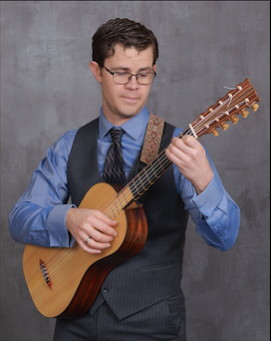
A self-starter at age 13, Keith began playing rock and roll but fell in love with classical/finger-style guitar in high school. Since that time he has wandered through genres and explored the diverse world of plucked instruments! Keith is very active as a teacher of guitar, mandolin and ukulele through private lessons and multiple organizations, but loves to perform as much as possible. He can often be heard playing early plucked instruments (lute, theorbo, and baroque guitar) with local chamber groups, and works part time as a Certified Music Practitioner (therapeutic music) in a local hospital.
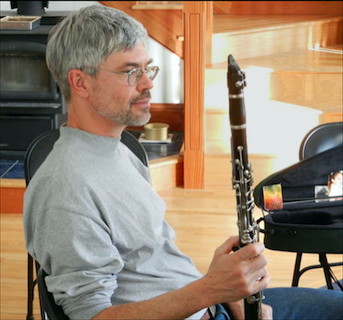
A clarinetist since fifth grade, Ed Secor escaped the confines of classical music when a friend suggested he bring his clarinet to a contra tunes jam. While still playing in a classical chamber group and occasionally participating in the Denver-based Ambler Clarinet Choir, he has now been playing for Front Range contra dances, waltz nights, and other community dances for nearly fifteen years. Further expanding his musical horizons he also plays in a klezmer band. When not playing music, Ed amuses himself with carpentry and woodworking.